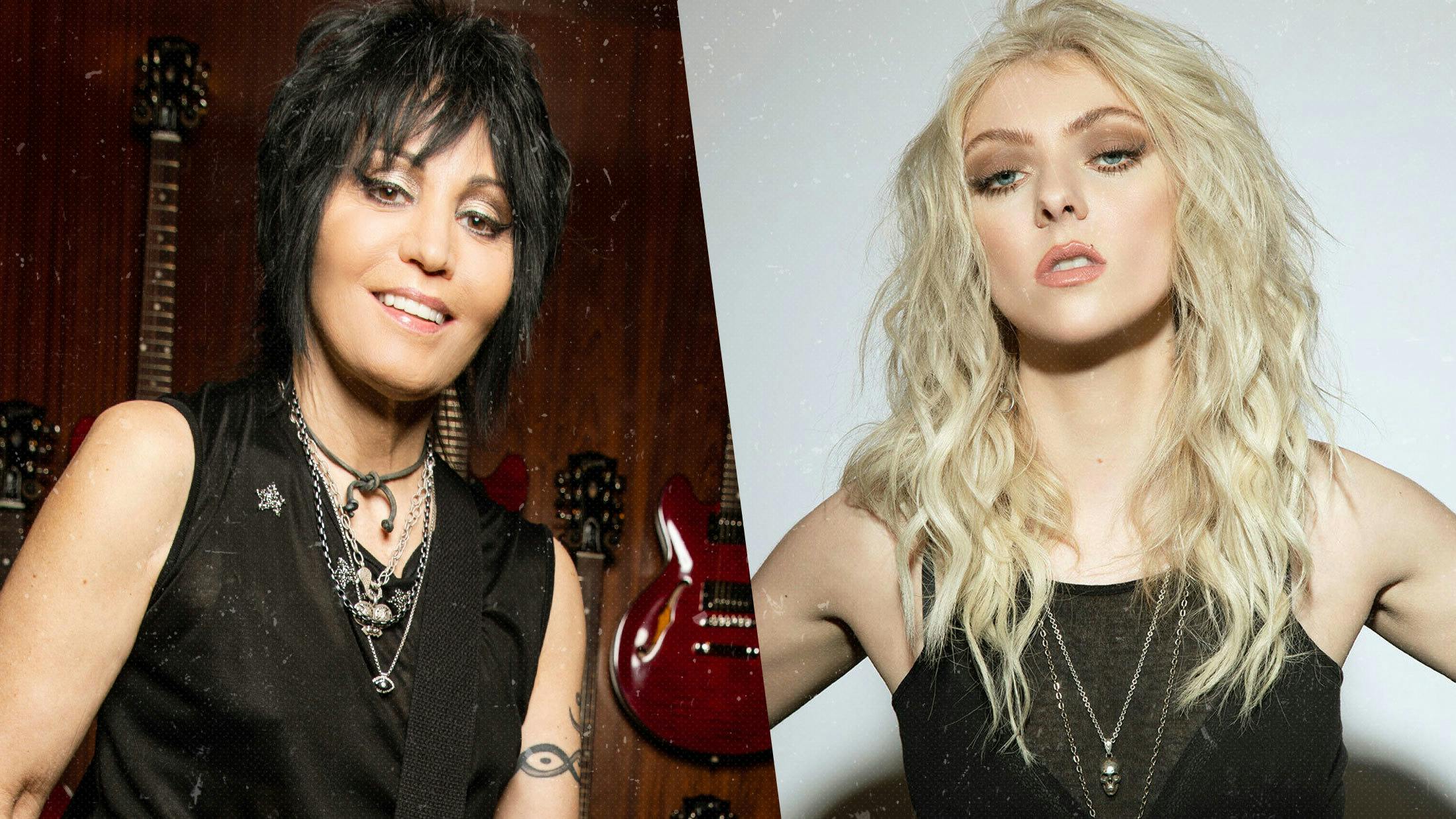
Taylor: “I fully agree with that. When I first formed Pretty Reckless, I was 14, 15 years old. It was hard to be taken seriously. Before they’d even heard it or seen it, people [had] written it off before they even gave it a chance. I mean that's in 2008. Our first record came out and never got played on radio in America. It technically was released here, but it never really got a chance. It was a very weird time where I felt very… I don't even think judged is the right word. It was like, ‘Whoa, okay, you just get written off.’ And at the same time I could look around at people like you, Debbie Harry and Suzi Quatro and go, ‘They did it.’ And they did it in a time period where this was unheard of. That gave me this boost, because I need this rock’n’roll. I always say it has this healing quality to it; it’s like soul food. You were one of the trailblazers that really allowed me to do this as a profession.
“To get to your point of women being in control of it: Our first album, like I said, technically was released in America, but it was not pushed, it was not received, it was essentially shunned. I was very unhappy with that. I started working with independent labels and actually licensing all my records so that I could maintain control, because that was something that was really important to me. The way it's distributed, the way you want to put it out, however you want to market it, that can be a collaborative conversation that we have, but I'm not just going to sign my life over and have you – a label or a person or a man or someone behind the curtain – telling me how to express myself. Because that's what rock’n’roll is – it's the ultimate freedom.
“When you were talking about women making the money and [being] in charge of it: my manager’s a woman, my lawyer’s a woman…”
Joan: “They’re the ones making the decisions about the money and where it goes. That [should] be not just in music, but across the board. I found in The Runaways and with The Blackhearts that outside of America, [in] countries with the same views as America about women, there was a certain sort of acceptance or a curiosity. Or something that felt less hostile in a lot of places to me.”
Taylor: “Hostile’s a really good word.”
Joan: “Because it doesn’t mean they liked you, but they weren’t throwing things and calling you names. I didn't know why it was so important for audience members to make those kinds of views known. Just walk out if you don’t like it. In Britain, there’s a greater variety of music infused into the British life. I find that even though the audiences [there] are tough, they will still watch critically. They wouldn’t just cut you down, they would give you a reason.”
Taylor: “I feel like when we put out our first album, we went over to the UK and the reaction there was way more hostile and judgmental because we're talking about the 2010 tabloid prime in the UK. They like to build you up to tear you down. But the organic response of the fans was so enthusiastic, so genuine and it came from a place of no judgement.”