News
Knocked Loose reveal new European and UK side shows
As well as joining Metallica in stadiums and playing Slam Dunk Festival, Knocked Loose have added a bunch more summer dates of their own…
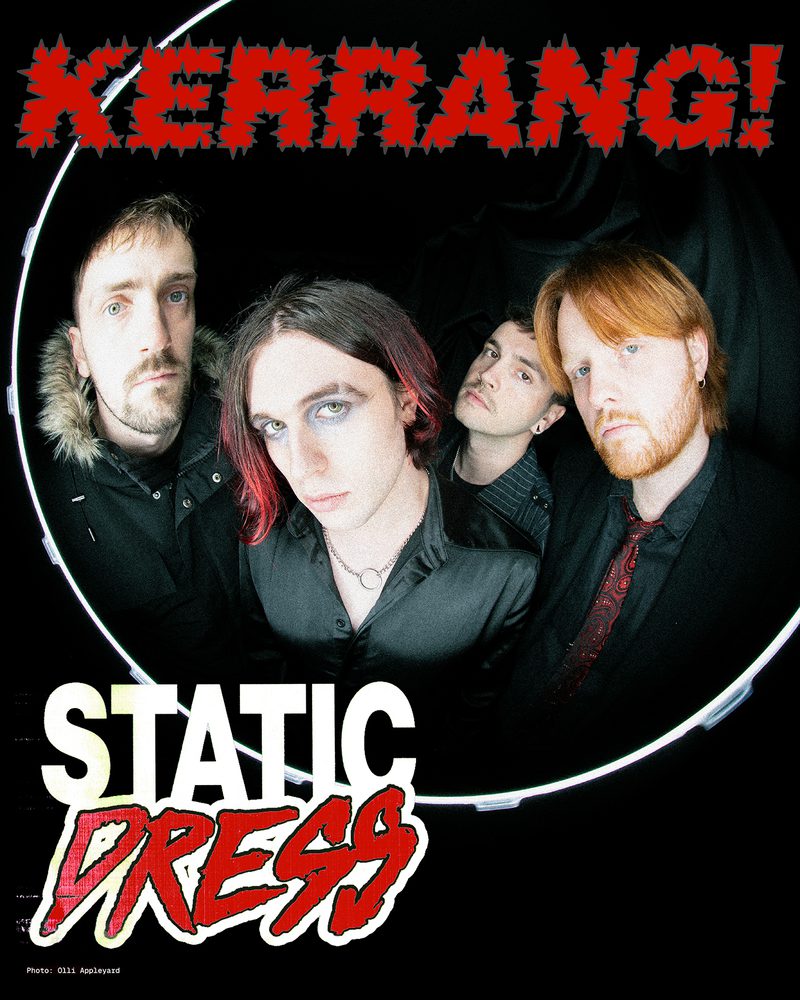
As Static Dress unveil their long-awaited new album Injury Episode, in the world-exclusive first interview, mainman Olli Appleyard meets Kerrang! for a passionate and brutally honest deep dive into the importance of staying true to yourself, never compromising on your vision, and keeping the magic of music alive…
If anything makes Olli Appleyard break out in hives, it’s the idea of bands rolling off a conveyer belt. Sterile production, algorithm-appeasing choruses, gloss instead of grit – all of these are the last things he wants to hear.
“People are making songs rather than creating music,” he theorises. “The most fun part about music is performing. I feel like that's completely missing from a lot of guitar music nowadays, because everyone's like, ‘I'm just gonna write a hit for radio or TikTok.’ I feel like you can just fully tell – everyone's song sounds the same, everyone goes to the same producers, so what comes out of it is the same, regurgitated ideas. I'm like, ‘This is so ass, because no-one has any individual ideas anymore.’”
The Static Dress frontman is telling us this while sat in the corner of his favourite café in Leeds; an industrial-looking spot where joggers pass by the windows on their canal-side runs. There are two bowls in front of him (“I got myself a feast,” he grins), one with a savoury-looking croissant, the other containing a hunk of cake laden with icing and sprinkles. He polishes off the croissant fairly quickly, but for the two-and-a-half-hours we're in his company, the cake miraculously isn't touched. Olli’s got too much to talk about – not just about the granular details of his band's new album Injury Episode, but the illusion of there being prescriptive confines to how music should be made and released.
The key word is ‘music’ and not ‘content’. After all, there is no measurable, trackable metric for how much you made someone feel something. What impact, after all, can a 15-second video leave when someone engages so passively with it and scrolls past in search of another spike of dopamine? It’s not in Olli’s nature to think this way, like a social media strategist instead of an artist, and the idea of it practically makes him turn green in the face.
“There’s this guy from London who always comes up [on my feed], and it pisses me off so much because he always says content doesn’t matter,” Olli begins. “‘No-one gives a fuck about how you put your art out, just put it out as quickly and as consistently as possible.’ I’m like, ‘You’re a fucking dick.’ You should be making stuff for yourself first and foremost, because any time I’ve not made something for myself, I’ve hated every second of it. His methodology works in pop or rap music but the minute you start putting that in something which is meant to be emotive, that’s meant to mean something to people, you completely devalue everything.”
There’s no snobbery or nose-wrinkling when he says this. Besides, he’s learned it all from experience.
“There are so many bands playing this game now when they’re uploading weird TikToks. I’ll openly admit that we tried these things and it didn’t work. It's not good for my health, it's not good for anything, because I want to make things that people care about. Unfortunately, making things that people care about doesn't always appease to an algorithm.”
Olli’s keen to stress that he respects how going viral on TikTok can change someone's life, but those people are more suited to it than he will ever be. He’s also seen the darker side when said algorithm’s insatiable hunger takes its toll.
“I think some people are designed for it, but I don’t like having people looking at me all the time,” he admits. “I’ve got friends in this who’ve blown up on TikTok and then you see how much it absolutely destroys them, and they don’t want to do it anymore. Where’s the joy there?”
In a way, Static Dress can be understood as the antidote to disposable music culture. Their artistry transcends songs and albums; they’ve created an entire universe across lore-strewn, meticulously detailed music videos and a multitude of notably analogue formats from comic books (to accompany their 2021 EP Prologue) to a video game extending the world-building of 2022 debut Rouge Carpet Disaster.
Nothing is ever done the simple way. Instead of sharing a festival line-up on the grid, a task that could take seconds, Olli will print the poster out, tape it to the wall, photograph it, edit it and only then upload it. The band often tease announcements through cryptic puzzles; before telling the world of their album launch event, A Live Death Display (in which phones were banned, and saw fans queuing down the street), they sent fans to a mini-game in which they had to figure out how to walk over to a stack of CRT TVs – a signature of the Static Dress aesthetic – and push a big red button. Indicating that more was afoot, an updated version directed players from that same stack of TVs warning them ‘Just because you can’t see something doesn’t mean it’s there’ to another TV and the limousine from the recent human props video. Next to it was a safe with a four-digit code to crack.
In all of this, Olli is creating with pure intentions. When people invent ways to sully art with cheap, prescriptive routes to making money, it feels personal. He wants to lead by example and be the change he wants to see, even though he knows his intentions can be misread.
“In the past, my confidence in what I was doing got confused with arrogance to a lot of people, and I get it,” he says. “That wasn’t what I intended to do.”
Self-importance, this is not – it comes from a place of deep care. This is someone for whom music is everything, for whom it gave sanctuary and community. You’d be hard pressed to find a figure in all of the alternative world who cares as deeply as Olli does.
“For me, music should be about two things,” he suggests. “You’re either spreading awareness for something, talking about real topics – a band like Speed is a great example, raising money for shit, always helping people, and with the Download boycott [in 2024, against Barclays sponsoring the festival and their alleged links to arms companies that trade with Israel], they created real change.
“Or you've got bands who provide escapism. I think about younger me who just wanted to get away from everything all the time. I had a really, really, really horrible time just being myself – somewhere there is the 16-year-old me who absolutely doesn't fit anywhere, hates everything and was scared to go outside – and anything to take me away is awesome.
“I want us to be the ultimate escapism band.”
“The four of us, we all like very different things,” Olli says of his bandmates – guitarist Vin Weight, bassist George Holding and drummer Sam Ogden – “but the one thing we can all agree is the term ‘real band’. When there’s shit happening onstage, you can hear mistakes, you can hear things going wrong, I’m like, ‘Thank fucking god.’ When I turn up now and I see more laptops than members in your band [I think], ‘Oh no, this is just not good anymore.’”
Injury Episode is the antithesis of that. While it represents a refinement of Static Dress’ ideas, it relishes the unvarnished and imperfect, with the same rigorous attention to detail they’ve always had. They spent days just working on guitar tones. Sam – who attracts an enormous level of respect among his peers in the drum world – bulldozed through most of these songs in one take. There was no over-manicured editing on computers and all four members worked as a unit, under the gaze of producer Erik Bickerstaffe from Loathe, who also produced their debut. At some point, we also hear all of them sing.
Talking of which, one of the most profound developments on the new record is in Olli’s voice. There’s a deeper, richer tone to his singing this time around, his words are clearer, and sometimes his voice goes to unexpected but no less emotive places (check out the hair-raising low notes on the first verse of late album highlight Adult Diamond).
“On the last record, I couldn’t sing at all,” he says. “I was singing because I had to, not because I knew how to. Now I’ve done it live. I’ve got better, I’ve learned what my voice is and what I’m capable of.”
While Olli is understandably proud of Injury Episode, he also believes it’s less immediate than its predecessor. Its arrangements are more complex, its structures and choruses throw out the rulebook of how they ‘should work’ – and there is simply no way that any of it can be neatly clipped out for the ’gram. There are swerving, jaw-dropping left turns, moments where you may ask, ‘Did they just do that?!’ On one song, there’s a gravity-defying key change, on another, a lithe melody almost more typical of ’00s pop. There are moments of skin-flaying heaviness, yet at the opposite end of the spectrum, ballads that will wring your heart out like a dishcloth.
“We could have shat out another like RCD in about three months, if we wanted to,” Olli shrugs. By contrast, Injury Episode’s creation was a lengthy, incremental process, unfolding slowly over several years between their laundry list of tour engagements, including transatlantic stints with Underoath, arena runs with Bring Me The Horizon and their first U.S. headline tour last year.
“The thing that I really want people to understand with this record is there’s no cheap thrills, there’s no easy wins,” the frontman stresses. “I’ve compared the first record to being like a mini dirt bike. It’s fun, but you’re not going to drive it to work. I compare this one to a classic car, where some people look at it and just go, ‘Yeah, cool, it’s a car,’ but some people look at that and go, ‘That is the best thing ever.’”
“There’s no cheap thrills with this record, there’s no easy wins”
In the visuals for initial single human props, we’re introduced to a pair of twins dressed in white, who are renowned for their uniqueness. As ever, that fame is a prison. They’re seen in a car mobbed by paparazzi in eerie masks, the white flash of cameras burning their eyes as they’re stalked on every side, cowering and holding up their hands as if to ask for mercy. They are Injury Episode’s central characters, and unlike the Rouge Carpet Disaster cycle, there’s greater interplay between the videos and album story. The next time we see them, in the video for Underoath collaboration Nostalgia Kills, they are corpses lying on slabs. Fame cost them their lives, but there's more that will soon unfold in this grim study of the toxicity of fame and the commodification of art.
“It’s like, you make a present for a kid at Christmas, you wrap it really well, it’s got a really nice bow on it, there’s glitter, it looks beautiful. He just runs in there, rips the thing, and goes, ‘Ah, it sucks.’ But you look at that present, and there’s effort, there’s time, there’s care, there’s everything put into it, but people don’t care anymore for any of that because they just want things,” explains Olli. “He sits there in the room, and he sees all the packaging on the floor, and he sees all the care that was in there, and he loved the idea of that present before he went and destroyed it.
“What I want more than anything is to be like, ‘Hey, here’s this thing that you love, appreciate everything that’s gone into it, rather than just tearing it open and getting what you want.’ A lot of the time when you want the fast content, when you want people to drop a song, drop a new album, you don’t actually like it. If you actually got a new album every time you said, ‘New album when?’ then you wouldn’t be fulfilled.”
There is a reason Injury Episode is asking you for more than just superficial engagement. The more you think about it, the more you get out of it, whether it’s noticing little details that hadn’t jumped out earlier or a deeper understanding of the story. What is happening? What are they saying? And what do these callbacks to past videos mean?
“It’s never going to be for everyone,” Olli says, relishing in how niche some of Static Dress' antics have become. “It's never going to be an obvious thing, but the people who see the classic car are going to hold on to it, hopefully forever.”
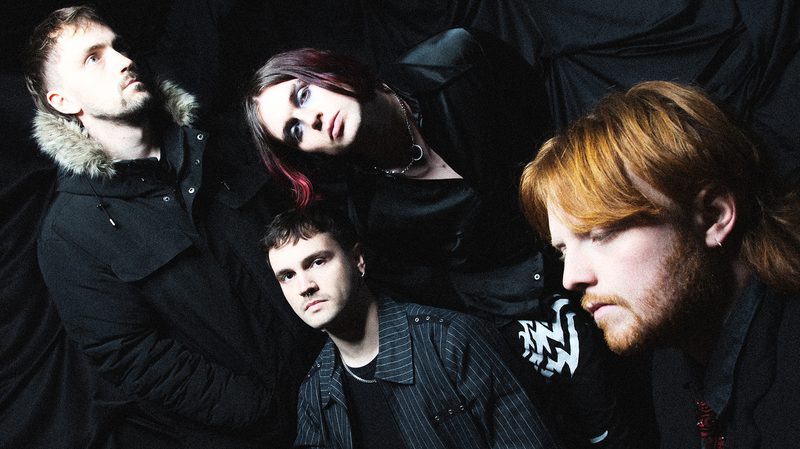
Olli Appleyard is an enigma, but also he isn’t. Sometimes he projects the appearance of one, looking every inch the towering artiste with his eye-catching taste in fashion – crop-tops, statement jackets, his signature monochrome acrylics – and his multi-hyphenate CV as singer, photographer, merch designer and filmmaker. In public, he’s notably guarded, skirting around questions of something as simple as his age.
“I want to keep the magic of the music alive,” he says, not wishing to override it with his own dirty laundry. “I don’t feel like it’s the done thing anymore because social media [expects you] to lay all your cards out on the table, and it’s like, ‘Oh, are you depressed? You’ve got to tell the internet about it!’ I want to be my own person. I don't want to ever look holier than thou, because, unfortunately, I'm just human and so are rest of the guys.”
He’s spent enough time in the hardcore scene for the idea of band and fan being on an equal level to seep deep into his bones, and as such, it seems anathema to him to make anything about himself. When he suffered a head injury on tour in the U.S. while opening for Dying Wish in November, and had to miss a string of shows, sharing a video explaining his absence was a step outside his usual boundaries, even though he understood it was necessary when people had paid to see them. “That destroyed me inside.”
One-on-one, he’s often startlingly open. He’s strong-willed and unfiltered, resolute in his opinions, frank at all times. He’s funny and kind, even offering to carry K!’s heavy bags halfway across the café. He talks to people on the counters in coffee shops like this one, something he learned from Sam – “Just talk to anyone and life’s pretty good.” He wants to be generous with his time when fans approach and politely say hello. If you’ve ever wondered who the ‘real’ Olli Appleyard is, he’s right in front of you.
On Injury Episode, he steps a little closer to us. Though the singer once admitted that perhaps only 30 per cent of Rouge Carpet Disaster was him and he disliked writing about himself, time has passed and the Olli who created that record during the pandemic has evolved into someone else entirely. And while this new effort is still wrapped up in story, his words are more direct as he works to process his trauma.
“A few years ago, I went through a time where I remembered repressed memories from when I was really young,” he says. Although he brings up the topic of his own volition, his voice quietens and his gaze drifts towards the floor. “It was horrible and put me in a position where I didn't want to be alive at all. This album is basically a big part of coming to terms with things that happened to you, trying to overcome them and move past them and work on from them.”
Grief also hangs heavily over the record. When Olli lost his grandma a few years ago, he had to be an anchor of support for his family, particularly his dad, while also adjusting to the hole it had opened in his own life.
“My grandma was a very, very important person in my family,” he admits. “It was really, really hard to deal with.”
His other grandma is the only grandparent he has left, and on the song hospice – which also serves as a commentary on people who discard you once you pass a certain age, and a reason why he never reveals his – he imagines the dread of the final goodbye when he eventually loses her too.
“She was the first ever friend I ever had in my whole life. I just know that when that time comes, it’s going to absolutely suck.”
“Just because you’re not at the end of the tunnel yet doesn’t mean that it’s not there”
‘Goodbye’ might be one of the most important, and one of the most pivotal, words on the entirety of the record. It’s dark and it’s final, evoking painful change, endings and loss. It's uttered just before Static Dress slide into closing song, Treading, a finale drenched in emotion but not with an uplifting tone. This is not a record with a happy ending, and neither should you search for one.
And it’s all for a purpose. Olli was never intending for this narrative to follow the arcs we often hear about mental health. So many stories are told from the point of view of someone who’s made it out the other side and is moving closer to a happy ending, or perhaps they have it already. He isn’t there yet. He wants to feel the conversation shift, not just to focus on the destination, but the painful yet worthwhile process that perhaps never truly stops.
“This is me still figuring it out, and I think that’s very important to have a conversation where it’s like, ‘Just because you’re not at the end of the tunnel yet doesn’t mean that it’s not there,’” he says.
“I've been through a lot of shit. I’ve learned a lot of shit by myself, and I think I'm still learning a lot. I am only human there. People still make mistakes. I think how it differs – whether you're a good person or whether you're bad – is how you learn and move from them, more than anything. I'm still moving forward, and the minute you think you know everything about something is the minute you fucked up.
“I want to normalise that a lot more. I’m still learning things,” he reiterates, “and being okay with the ending of the book not being written yet.”
Injury Episode is released May 29 via Sumerian
Read this next: